The final school bell rings, uniform ties are loosened, and the six-week summer holiday stretches out ahead. For children, it is a time of pure freedom. For parents, it is a mix of relief (no more morning school runs!) and the daunting task of figuring out how to fill the endless days.
While rest and play are absolutely essential for a child’s well-being, a complete six-week break from academics carries a hidden risk. Teachers and educational psychologists refer to this as the "Summer Slide", the phenomenon where children lose significant academic ground over the long holiday.
When September rolls around, instead of moving forward with new topics, teachers spend the first four weeks just trying to reteach what was forgotten over the summer.
If you are looking for ways to balance relaxation with brain-boosting engagement, this guide is for you. We will explore the reality of summer learning loss, share age-appropriate educational summer activities, and explain why a little bit of summer holiday tuition can ensure your child starts the new academic year with absolute confidence.
The Reality of the "Summer Slide" 📉
The Summer Slide is not a myth invented by teachers to give out more homework; it is a highly documented cognitive phenomenon. When the brain stops practising core skills, like times tables, spelling rules, or reading comprehension, the neural pathways associated with those skills begin to weaken.
To understand the impact of a complete academic pause, we can look at extensive educational research. According to data compiled by the Education Endowment Foundation (EEF) and various global literacy studies, the drop in academic retention over the summer is stark:
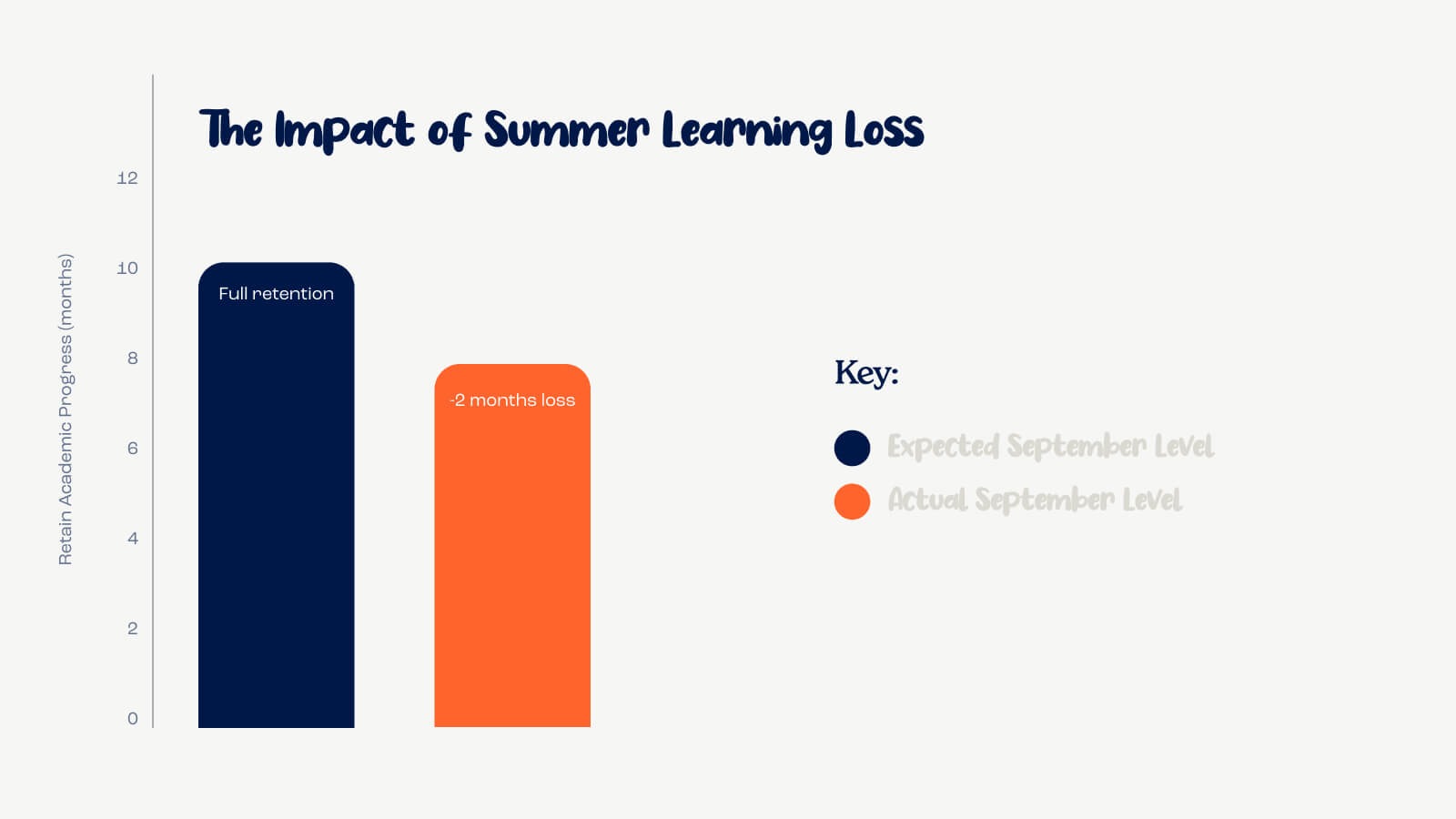
- On average, students experience up to 2 months of learning loss in reading and maths skills during the six-week summer break.
- This means a child entering Year 5 in September may effectively be operating at a mid-Year 4 level for the first few weeks of the new term.
This loss disproportionately affects spelling and maths computation, which are skills that require regular, active recall. However, this does not mean your child needs to sit at the kitchen table doing worksheets for six weeks. The key to preventing summer learning loss is integrating stealthy, engaging learning into your daily routine.
Stealth Learning: Educational Activities at Home 🏡
The best summer holiday activities do not feel like learning at all. By incorporating numeracy and literacy into everyday tasks, you can keep their cognitive gears turning without triggering complaints of "But it's the holidays!"
Here are some highly effective, low-cost, educational and fun activities for your family:
1. The "Real World" Maths Challenge
Numbers are everywhere. Take the abstract maths concepts they learn in school and make them physical.
- The Supermarket Sweep: Give your child a budget (e.g., £10) and a small shopping list. Ask them to calculate the total as you walk down the aisles, spend time figuring out which brand of beans is the best value per 100g and calculate the exact change you should receive.
- Baking Fractions: Baking is pure chemistry and mathematics. Halving or doubling a recipe is a fantastic way to practise fractions and ratios. If a recipe calls for 150g of flour for 6 cupcakes, how much do you need for 12?
- Travel Time: If you are driving to a holiday destination or a theme park, have older children calculate the ETA based on the distance and your average speed.
2. The Summer Reading Challenge
Reading is the single most important skill to maintain over the summer months.
The National Literacy Trust consistently emphasises that children who read for pleasure over the summer return to school with higher emotional intelligence and broader vocabularies.

- Join the Library Challenge: Almost all local UK libraries run a free Summer Reading Challenge, encouraging children to read six books over the holidays with stickers and medals as rewards.
- Diversify the Reading Material: If your child refuses to read novels, let them read comic books, sports biographies, or even the instructions for a new board game. Reading is reading.
- The Subtitles Trick: A remarkably simple hack is to turn on the subtitles on your television. While they watch their favourite shows, their brains will automatically follow the text, reinforcing word recognition and spelling.
3. Creative Writing (Without the Red Pen)
Writing is usually the first skill children abandon during the summer. Keep it fun and purposeful.
- The Holiday Journal: Buy them a cheap scrapbook and ask them to keep a summer diary. They can glue in ticket stubs from the cinema, leaves from a park walk, and write a few sentences about what they did.
- Postcards: Have them write physical postcards to grandparents or school friends.
- Reviewing Days Out: If you visit a museum or a theme park, ask them to write a 5-star review of the experience when they get home.
For more writing games, visit our guide on Supporting Writing Development at Home.
High Stakes: When Summer Learning Really Matters 🎯
While keeping the brain active is important for all ages, there are certain year groups where the summer holidays act as a critical bridge. If your child falls into one of these categories, preventing the summer slide is essential.
1. The 11+ Candidates (Going into Year 5 or Year 6)
If your child is sitting the 11+ exams in September, the summer holidays are the final stretch. However, burnout is a massive risk. Educational summer activities for this group must be balanced.
- Little and Often: Do not force them to do three hours of mock papers a day. Use the Pomodoro technique (25 minutes of focus) early in the morning, leaving the rest of the day for play.
- Focus on Vocabulary: 11+ success relies heavily on a broad vocabulary. Introduce a "Word of the Day" over breakfast and challenge the family to use it in a sentence before bedtime. (Read our full 11+ Preparation Guide for more specific tips).
2. The Transition to Secondary School (Going into Year 7)
The jump from Year 6 to Year 7 is the biggest transition in a child's educational life. They go from being the oldest in a small primary school to the youngest in a massive secondary school.
If they struggled with their KS2 SATs in May, starting Year 7 with gaps in their foundational maths or reading skills will cause immediate anxiety. Summer is the perfect time to plug those specific gaps without the pressure of school peers watching.
3. The GCSE Build-Up (Going into Year 10 or 11)
For teenagers, summer is sacred. However, if they fell behind in Year 9 or 10, the summer before their GCSE year is their only real chance to catch up without the overwhelming pressure of ongoing coursework. Encourage them to use platforms like BBC Bitesize for just 30 minutes a day to consolidate their science and maths knowledge.
The Game-Changer: The Benefits of Summer Tuition 🚀
While reading at home and baking cakes are wonderful, sometimes parents need a little external support. This is where professional summer tuition comes in.
Many parents mistakenly believe that tuition is only for term-time homework help or cramming right before an exam. In reality, summer holiday tuition is often the most effective learning period of the entire year. Here is why:
1. Zero School Fatigue
During the autumn and spring terms, children attend tuition after a gruelling 6-hour school day. They are tired, hungry, and often irritable. During the summer, children come to their sessions refreshed, relaxed, and with plenty of mental energy to spare.
2. Bridging the Knowledge Gaps
In a class of 30 children, teachers have to move through the curriculum at a set pace. If your child did not quite grasp long division in March, the teacher cannot stop the whole class to review it. Summer provides the ultimate "pause button". A tutor can use this time to go back, identify exactly where the child's understanding derailed, and fix the foundation before they are expected to build on it in September.
3. Low-Pressure Confidence Building
Without the immediate threat of school tests or keeping up with the child sitting next to them, summer learning is low-stakes. A good tutor makes these sessions engaging and confidence-boosting. When a child masters a difficult concept in July, they walk into their new classroom in September feeling ten feet tall.
4. Maintaining the Routine
Children crave routine, even if they claim they do not. Having a set appointment for summer tuition once or twice a week provides a gentle structure to the long, formless weeks of August, making the eventual shock of the back-to-school alarm clock much easier to handle.

How to Plan the Perfect Summer Schedule 📅
To ensure your child enjoys their holiday while still beating the summer slide, follow the 80/20 Rule.
- 80% Rest and Play: Let them sleep in. Let them build forts, ride their bikes, play video games, and be bored. Boredom is the birthplace of creativity.
- 20% Structured Engagement: Allocate a small portion of the day (preferably in the morning when their brains are freshest) to structured activities. This could be 20 minutes of reading, a quick times-tables game, or their weekly session at a tuition centre.
By separating the "work" time from the "play" time, you prevent learning from bleeding into their relaxation, keeping the peace at home.
Start September Strong 🎒
The six-week holiday does not have to result in a six-week setback.
By understanding the reality of summer learning loss and proactively weaving educational summer activities into your family's routine, you can protect your child's hard-earned academic progress.
Whether it is calculating the cost of a picnic, joining the library challenge, or enrolling in structured summer holiday tuition, the goal is simple: keep the brain engaged.
When the new term starts and the teacher asks the first question, you want your child's hand to be the first one in the air.
Ready to Beat the Summer Slide? Let Learning Cubs Help!
Do not let your child lose momentum over the holidays. At Learning Cubs, our engaging, small-group summer sessions are designed to keep minds active, plug knowledge gaps, and build massive confidence ahead of the new academic year.
Whether they are preparing for the 11+, transitioning to high school, or simply need a boost in KS1/KS2 Maths and English, our expert tutors (across Bury, Bolton, Nelson, Blackburn, Burnley, Keighley, and Rochdale) make summer learning fun and completely stress-free.
Give them the September advantage. Take the first step towards a confident start to the new school year today.
Click here to register for a FREE Assessment at your local Learning Cubs Centre!
FAQs
Will doing schoolwork over the summer cause my child to burn out?
Not if it is managed correctly! Burnout happens when children are subjected to high-pressure, prolonged study sessions. Summer learning should be "little and often". Just 20 to 30 minutes of light, engaging practice a few times a week is enough to prevent learning loss without impacting their rest.
What is the best subject to focus on during the summer holidays?
If you only have time to focus on one thing, make it Reading. Reading underpins every other subject across the curriculum, from understanding maths word problems to analysing historical sources. Encourage them to read absolutely anything they enjoy for 20 minutes a day.
Is summer holiday tuition worth it if my child gets good grades?
Yes. Even high-achieving students experience the summer slide. For children who are already doing well, summer tuition is not about catching up; it is about "pre-learning". Tutors can introduce the topics they will face in September, giving them a massive confidence head-start and allowing them to tackle advanced concepts straight away.
My teenager refuses to do any educational summer activities. What should I do?
Teenagers need a lot of downtime to recharge. Instead of forcing "activities", lean into their independence. Encourage them to find a summer job or volunteer, which builds real-world maths and communication skills. Alternatively, a professional tutor can remove the parent-teenager conflict entirely, providing a focused, neutral space for learning.