


Grammar & Selective School Admissions near Bolton: The 2026 Guide
If you are a Bolton parent wondering how to get your child into a grammar or selective school, here is the honest starting point. Greater Manchester does not have any state grammar schools, so there is no free, council-run grammar in Bolton itself. The selective options closest to home are independent (fee-paying) schools, above all Bolton School, with Bury Grammar a short drive away. The nearest free state grammar, Bacup and Rawtenstall Grammar School (BRGS), is about 16 miles north.
That does not mean a selective or academic education is out of reach. Independent schools like Bolton School offer generous means-tested bursaries, including full bursaries for lower-income families, and free state options exist if you are willing to travel.
This complete guide to Bolton grammar school admissions explains, in plain English, which grammar schools near Bolton your child can apply to, how the 11+ Bolton entrance exams work, what bursaries and costs to expect, and how to give your child the best possible chance, whatever your budget.
🤔 Grammar, free school or independent: what is the difference?
Before we dive in, it helps to know the difference between the types of school you will come across. Here is a quick breakdown:
- State grammar school (for example BRGS): free to attend, but selective, so your child must reach a high standard in an entrance test to be eligible.
- Free school or academy (for example QEGS Blackburn): free to attend and non-selective, with no competitive pass mark, though there may be an assessment used for banding.
- Comprehensive school (like most secondary schools in Bolton): free to attend and non-selective, with places given by catchment or distance.
- Independent (private) school (for example Bolton School): charges fees, sets its own entrance exam, and may offer bursaries to help with costs.
In other words, ‘grammar’ in a school’s name does not always mean ‘selective’ or ‘free’. Bolton School’s Boys’ Division was historically called Bolton Grammar School, yet today it is independent. If cost is a concern for your family, the bursary and state grammar routes are designed to open these schools up on merit.
🏫 Which grammar schools near Bolton can my child apply to?
When people search for grammar schools near Bolton, they usually mean any selective option. There are three realistic routes for academically able children in the Bolton area: two independent schools close by, and the nearest free state grammar a little further out.
1. Bolton School (Boys’ and Girls’ Divisions), independent and selective
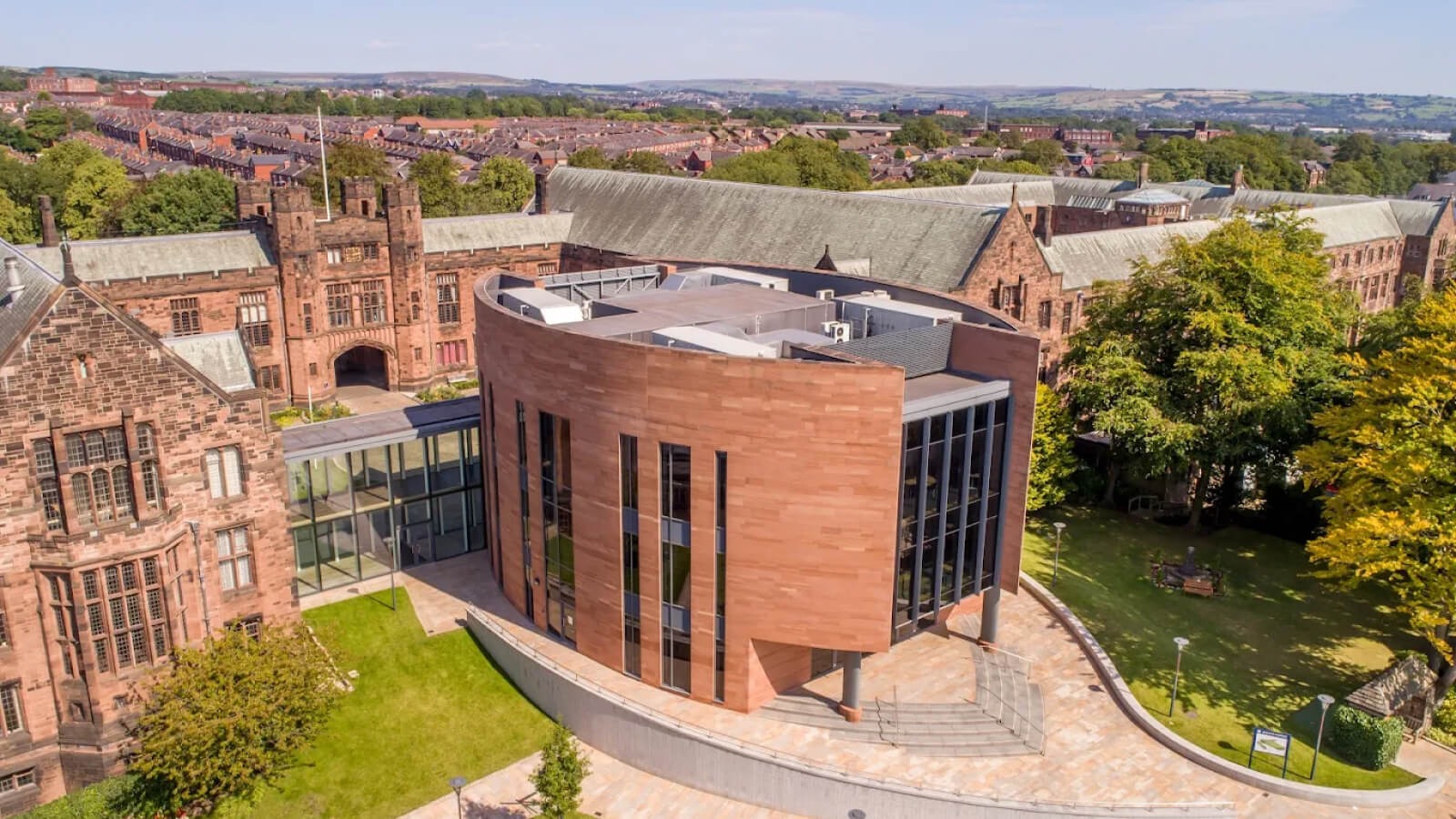
Bolton School is one of the oldest and largest independent day schools in the North West. The boys' school was already established by 1516 as Bolton Grammar School for Boys, and the girls' school opened in 1877. In 1913, Lord Leverhulme funded both schools on the condition that they became equal partners, and the two have shared the Chorley New Road campus since the late 1920s, with one wing for boys and one for girls.
From age 11, boys and girls are taught separately in the Boys' Division and the Girls' Division, but they share the same site and facilities. The academic results are strong: in 2025, more than half of all GCSE grades (53.1%) were at grades 9 to 7.
Getting there is easier than many families expect. The school runs more than 20 coach routes across the North West, and nearly half of pupils use them. There is a charge for the coaches.
The entrance exam is set by GL Assessment and sat in January of Year 6. It covers English, maths and non-verbal reasoning, followed by an interview, and the school asks your child's primary school for a reference. Registration usually closes in early December.
Bursaries are the part many Bolton families don't realise they can access. Around one in five Bolton School pupils receives bursary support, and full bursaries are available for lower-income families. The bursary form arrives with the exam invitation and must be returned before your child sits the exam, followed by a short meeting with the school's bursary team. Full details are on the school's bursaries and scholarships page.
Details accurate as of 2026. Always check the Bolton School website for the latest admissions and bursary information.
2. Bury Grammar School (Boys and Girls), independent and selective
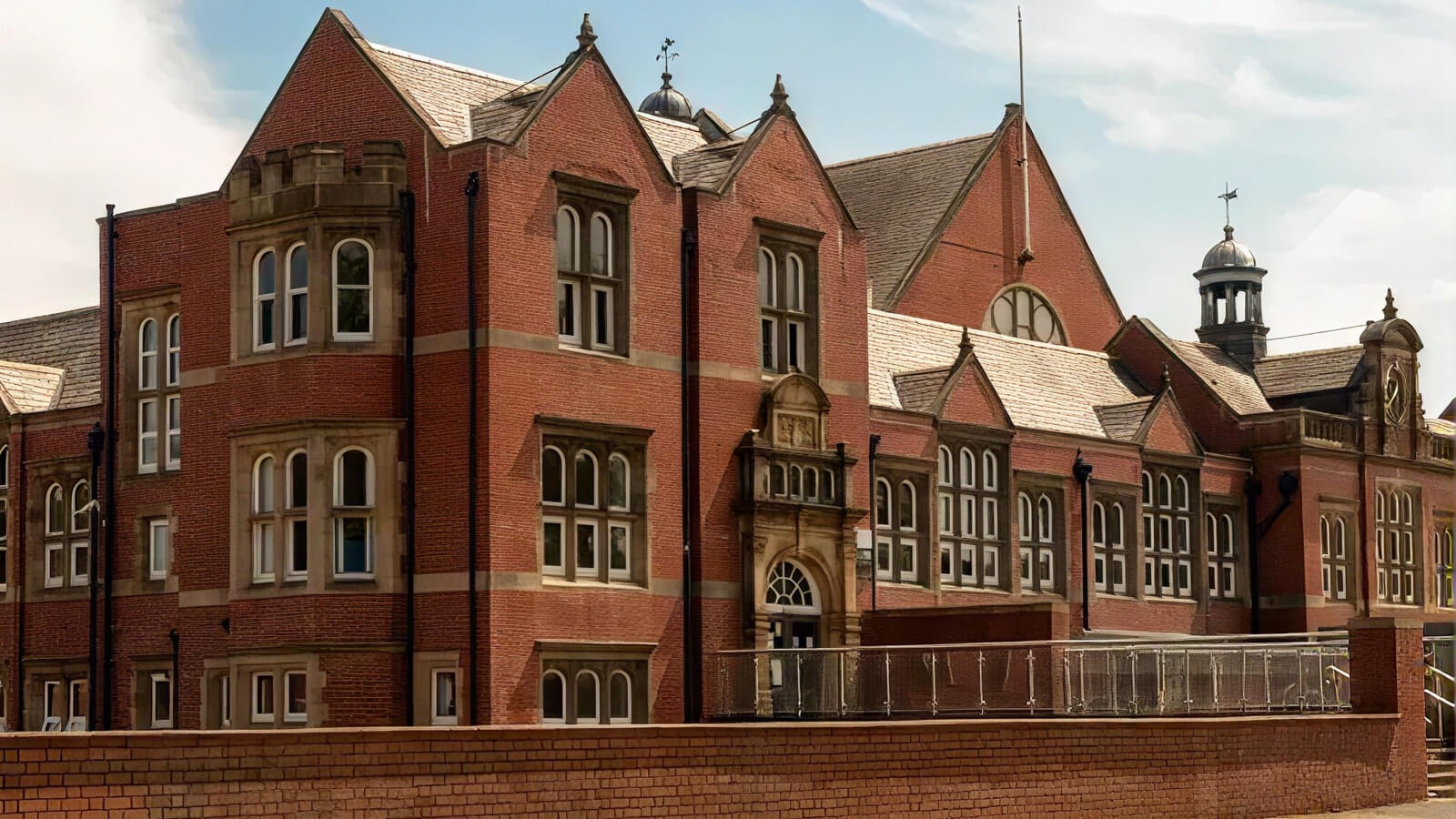
Bury Grammar School has roots going back to around 1570, when it was a grammar school attached to Bury Parish Church. It was re-founded in 1726 by the Reverend Roger Kay and has been on its Tenterden Street site, close to Bury town centre, since 1903.
Today it is one school for ages 3 to 18, with around 1,250 pupils, separate senior schools for boys and girls, and a 45-acre campus with strong sports facilities. Results are high: in 2025, 54% of GCSE grades were at 9 to 7, according to The Good Schools Guide.
The entrance exam takes place in January and has three papers: English, maths and verbal reasoning. Bury Grammar offers means-tested bursaries and scholarships, and runs its own coach services, so it is a realistic option for Bolton families about 8 miles away.
Details accurate as of 2026. Always check the Bury Grammar School website for the latest admissions information.
3. Bacup and Rawtenstall Grammar School (BRGS), free and selective
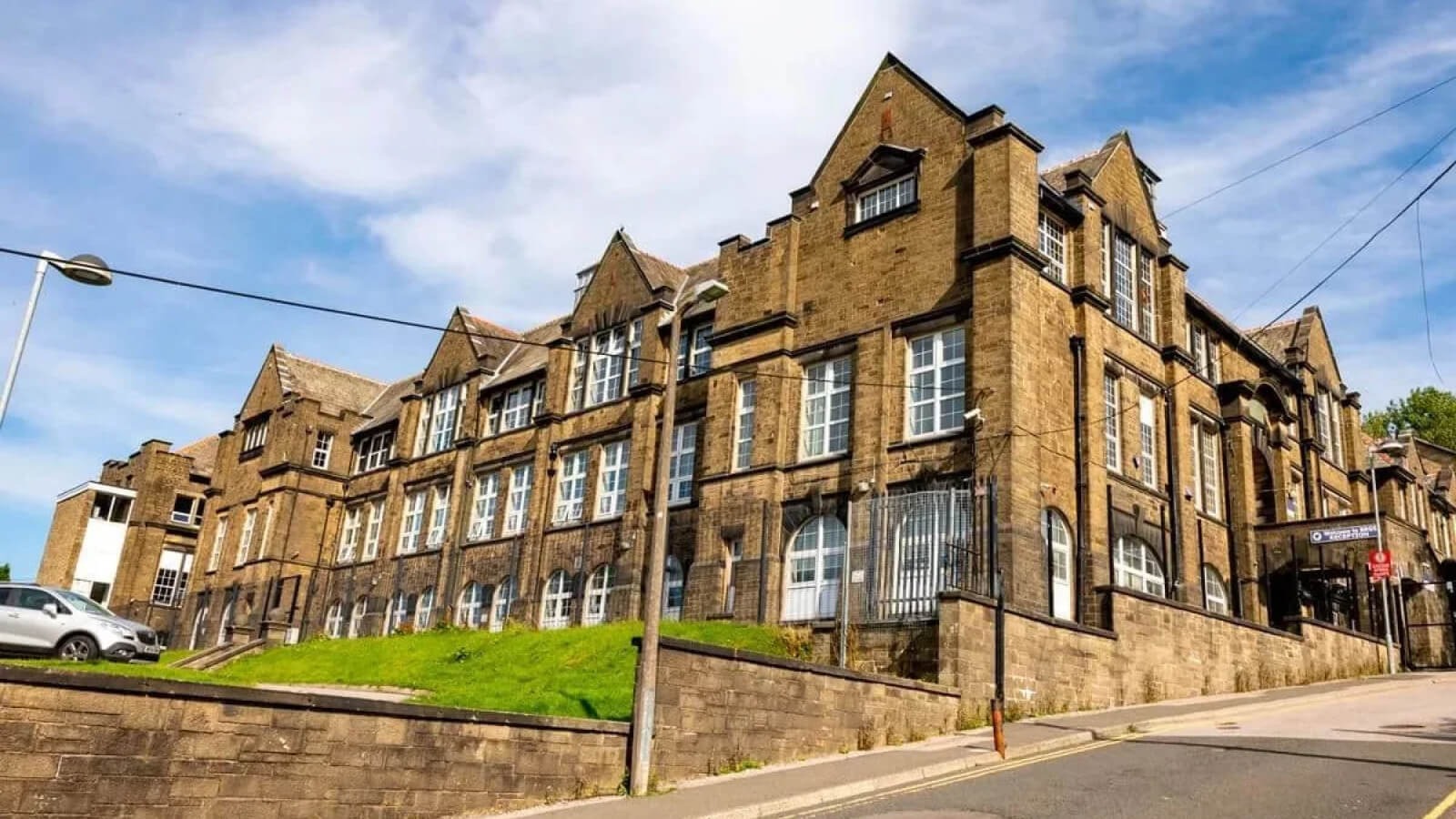
Bacup and Rawtenstall Grammar School is the nearest free state grammar to Bolton, about 16 miles north in Waterfoot, Rossendale. It was founded in the early 1700s as Newchurch Grammar School, moved to its current site in 1913, and is now part of the Star Academies trust. It is co-educational and completely free to attend.
BRGS admits up to 180 pupils into Year 7 each year, all chosen on academic ability, and its results reflect that. In 2025, 97% of pupils achieved grades 9 to 5 in both English and maths, and every pupil achieved at least a grade 4 in both.
The entrance test is set by GL Assessment and sat on a Saturday in late September of Year 6. It has three multiple-choice papers: verbal reasoning, maths and English. You register directly with the school (registration usually closes in mid-September), and you must also name BRGS on your Bolton Council secondary school application by 31st October.
One thing to weigh up honestly: BRGS gives priority to children from primary schools in Bacup, Rawtenstall and the surrounding Rossendale area. Bolton children apply as out-of-area candidates, so they usually need a very strong score to win a place, and the daily journey is a real commitment. It is well worth considering for a high-achieving child, but best treated as one option alongside the independent schools rather than a sure thing.
Details accurate as of 2026. Always check the BRGS website for the current admissions calendar.
A note on QEGS Blackburn
Some Bolton families also look north to QEGS Blackburn, a free, state-funded school about 15 miles away. Despite ‘grammar’ in its name it is officially non-selective, using a ‘fair banding’ assessment rather than a competitive pass mark, so it is worth knowing about as another free, academic option. We cover QEGS, alongside Clitheroe Royal Grammar, in more detail in our guide to Blackburn grammar school admissions.
🔍 Bolton School, Bury Grammar and BRGS: at a glance
Here is a quick side-by-side of the three main selective routes for Bolton families:
💷 Why affordable tuition matters so much around Bolton
Because Bolton’s selective schools are mostly independent, preparing for entrance exams can feel like something only better-off families can do. The national picture backs that worry up.
According to the Sutton Trust, 29% of secondary school pupils in England and Wales have received private tutoring at some point, rising to 45% in London but just 26% across the rest of England. Access is heavily shaped by income and geography.
That gap is exactly what Learning Cubs exists to close. Good preparation should not depend on what your family can afford, which is why we offer funded and subsidised places so that children across Bolton can get the same support as anyone else, whichever school they are aiming for.
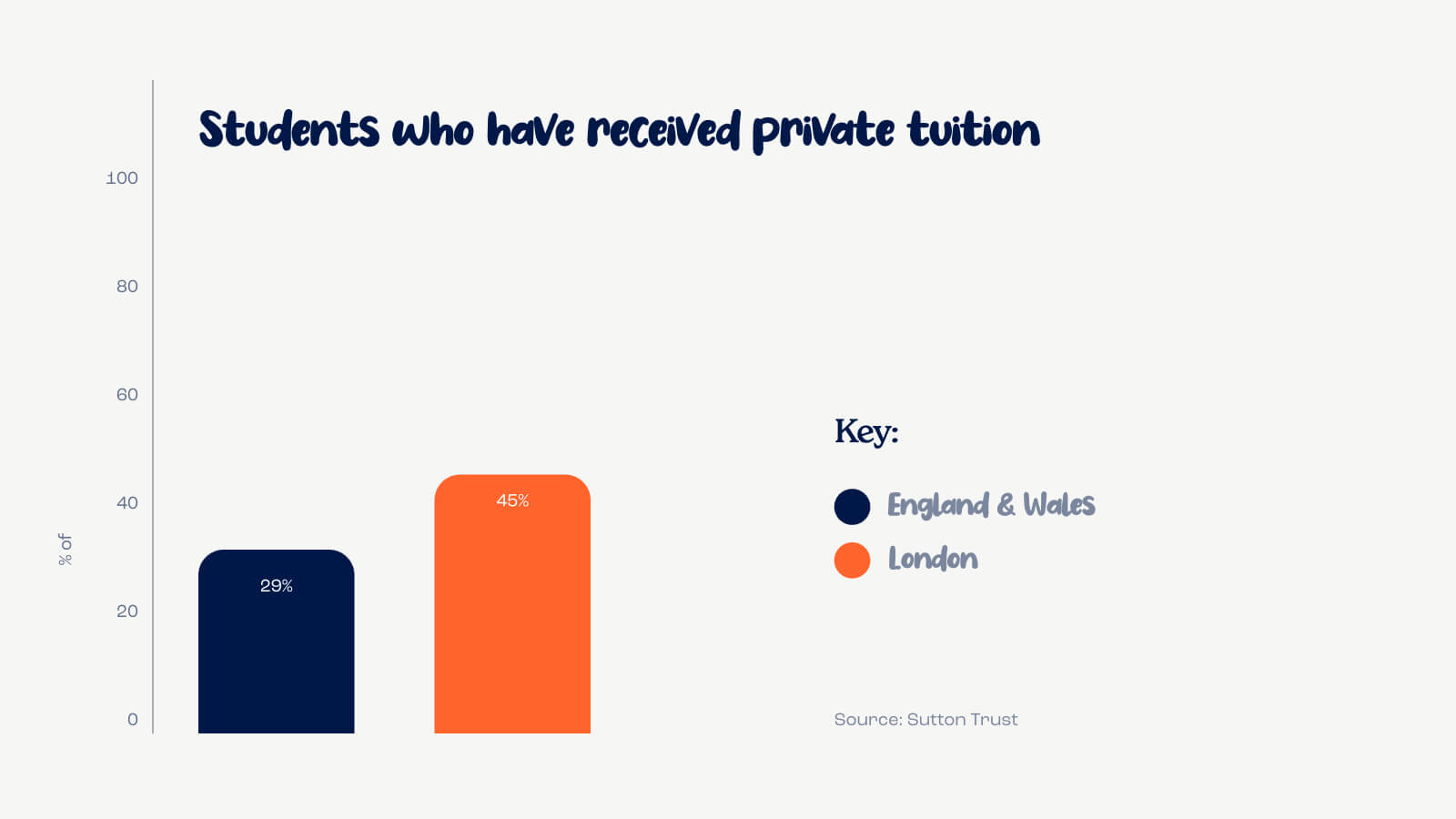
Figures accurate as of 2026, based on the latest published Sutton Trust research. Always check the most recent data directly.
✅ How places are allocated (and what ‘pass mark’ really means)
People often ask “what is the pass mark?”, but for a selective school like BRGS there is usually no fixed one. Children are ranked by score, and those who reach the required standard (in practice often around the top 25%) become eligible. If more eligible children apply than there are places, the school works through its oversubscription criteria in order:
- Looked-after and previously looked-after children, ranked by score.
- Children with an EHCP that names the school.
- Children who attended Area 1 priority (Rossendale) primary schools, ranked by score.
- Children who attended Area 2 priority primary schools, ranked by score.
- All other qualifying children, ranked by score (this is the group most Bolton applicants fall into).
The practical takeaway for Bolton families: because you apply to BRGS as an out-of-area candidate, your child usually needs to perform very strongly to win a place ahead of local Rossendale children who also qualify. For the independent schools, places go to the highest performers in the entrance exam, with bursaries decided separately on household income.
Oversubscription criteria accurate as of 2026, based on the school’s published admissions policy. Criteria can change each year, so always check the latest policy.
Worried about the cost of preparing for the 11+ Bolton families face? At Learning Cubs in Bolton, many families qualify for funded or subsidised places, so expert 11+ support can cost little or nothing. Take two minutes to check if your family is eligible.
📆 The 11+ calendar for Bolton families
Bolton families applying to selective schools juggle two calendars at once. BRGS is a state school, so its places come through Bolton Council. Bolton School and Bury Grammar are independent, so you apply to them directly and they make their own offers. Here is how a typical year runs, starting from the summer your child finishes Year 5.
Summer of Year 5
- BRGS opens registration for its entrance test, usually in the spring or early summer. If your child may need access arrangements on the day, register early.
- A good time to visit schools. Bolton School and Bury Grammar hold open events through the year, with Bolton School's main Open Morning in October.
September of Year 6
- BRGS registration closes, usually around mid-September. Late entries are not accepted.
- Bolton Council opens secondary school applications.
- Late September: the BRGS entrance test.
October of Year 6
- BRGS results arrive, usually mid-October.
- 31st October: deadline for your Bolton Council application. Name BRGS here if your child qualified, along with your other state school choices. The independent schools are not on this form.
December of Year 6
- Registration for the Bolton School and Bury Grammar entrance exams usually closes. If you want a bursary, tick the box on the application form. The bursary paperwork must be back before your child sits the exam.
January of Year 6
- Bolton School and Bury Grammar hold their entrance exams, with interviews shortly afterwards. If your child is aiming for both a state and an independent place, this is their second exam season.
February and March of Year 6
- Late February: Bolton School sends out offer letters, including the provisional bursary amount.
- Early March: National Offer Day, when Bolton Council confirms state school places, including BRGS.
Because BRGS comes first in September and the independent schools follow in January, many families prepare for both. It keeps options open and gives a second chance if one exam doesn't go to plan. For a step-by-step guide to preparing your child from Year 4 onwards, see our complete guide to 11+ exams.
Dates accurate as of 2026 and they shift slightly each year. Always confirm exact dates on each school's website and the Bolton Council admissions pages.
🌟 Give your Bolton child the best chance, whatever your budget
Whether your child is aiming for a place at Bolton School, Bury Grammar or BRGS, or simply needs to rediscover their confidence and love of learning, the right support makes a real difference. At Learning Cubs, we work in small groups of no more than six, with one-to-one help where it is needed, building bespoke learning journeys around each child, from those who are struggling right through to high-flyers we push even further.
We are Ofsted-registered (registration number 2597663), and funded and subsidised places are available, so expert 11+ tuition is within reach for families across Bolton, often at little or no cost. As the Sutton Trust’s research shows, that kind of access is exactly what makes the difference.
Step 1: Check if your family qualifies for a funded place (takes about two minutes).
Step 2: Register for a free assessment, so we can build the right plan for your child.
Bolton grammar and selective school FAQs
Are there grammar schools in Bolton?
There are no state grammar schools in Bolton, because Greater Manchester has none. The selective options in Bolton are independent (fee-paying) schools, mainly Bolton School and Bury Grammar School. The nearest free state grammar is Bacup and Rawtenstall Grammar School (BRGS), about 16 miles north.
Is Bolton School a grammar school?
Bolton School is an independent, fee-paying school, not a state grammar. The Boys' Division was historically called Bolton Grammar School, but today it is private and selective, with its own entrance exam. Means-tested bursaries are available, including full bursaries for lower-income families.
Does Bolton School offer bursaries?
Yes. Bolton School charges fees, but offers means-tested bursaries, including full bursaries for lower-income families. You apply as part of the admissions process; see the school’s bursaries and scholarships page for current fees and eligibility.
What is the nearest free grammar school to Bolton?
The nearest free state grammar school to Bolton is Bacup and Rawtenstall Grammar School (BRGS) in Waterfoot, about 16 miles north. Entry is by a GL Assessment entrance test taken in Year 6, and there are no fees.
When are the 11+ entrance exams near Bolton?
Bolton School holds its entrance exam in January of Year 6. BRGS holds its GL Assessment test in late September of Year 6. Each school runs its own timetable, so a child can sit more than one. Always check current dates on each school's website.


